iPhone 18 Pro Leak: Dual Battery Variants and Everything Revealed So Far
A recent leak has shared new details about Apple's upcoming iPhone 18 Pro. The information comes from Chinese tipster Digital Chat Station and was confirmed by Ice Universe on Weibo. The standout detail is that Apple is testing two battery sizes for the iPhone 18 Pro, depending on whether the phone has a physical SIM card tray or is eSIM-only. The eSIM-only version has more space inside, so Apple is testing it with a larger battery.
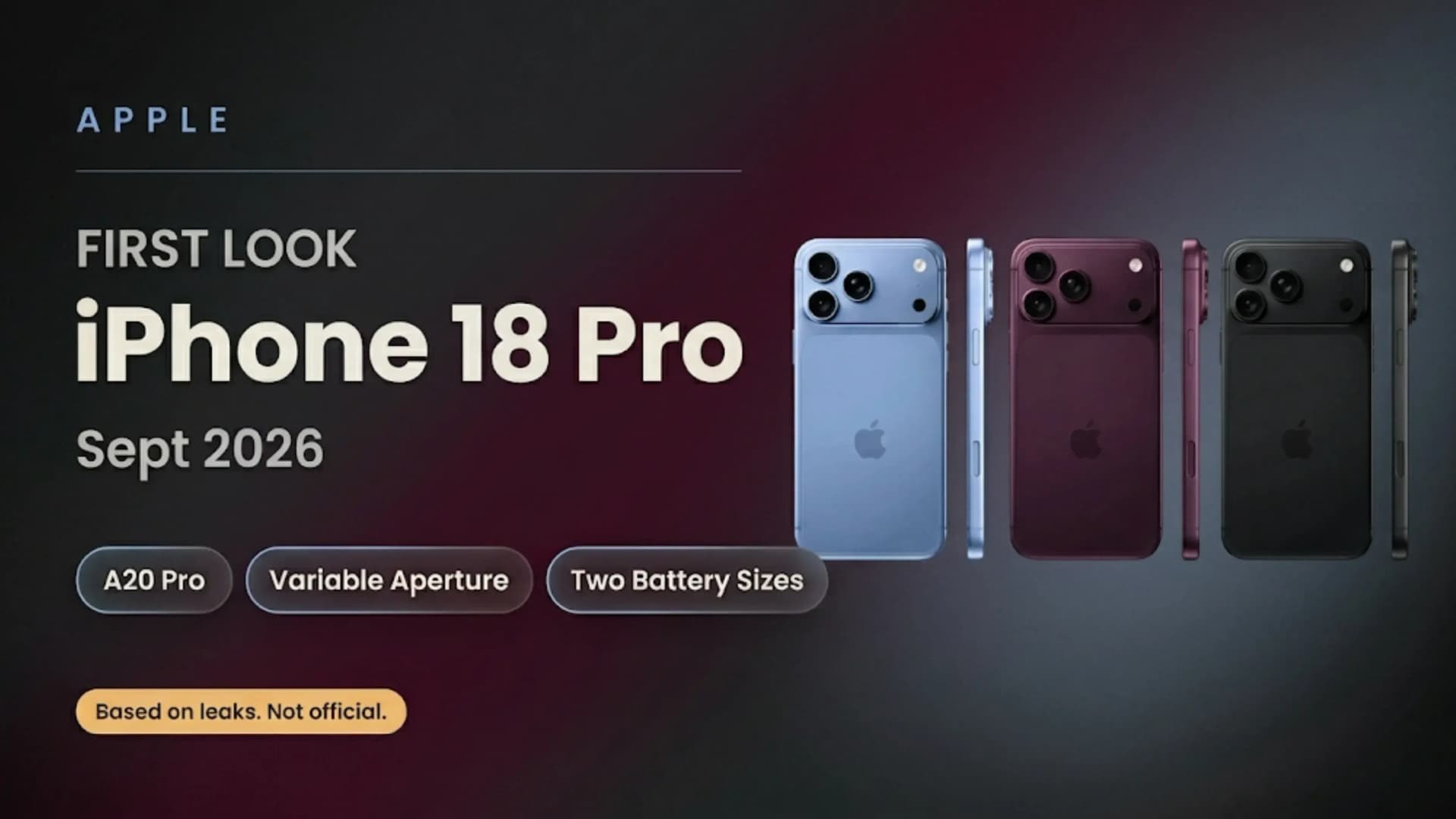
The iPhone 18 Pro is expected to feature the A20 Pro chip built on TSMC's 2nm process, a 48MP main camera with variable aperture, and a triple 48MP camera setup. The battery should be slightly bigger than the iPhone 17 Pro's. No major design changes are planned for 2026, as Apple is reportedly saving a bigger redesign for a special anniversary model in 2027.
As with any pre-launch leak, the iPhone 18 Pro specs being tested now might change before mass production and the expected September 2026 launch. Here’s a summary of the current leaks and what they could mean.
Yaskar Jung Shahis a technology enthusiast with over 5 years of experience covering AI, machine learning, and has contributed to major tech publications worldwide. He holds a Master's Degree in Computer Science from leading institutions.
iPhone 18 Pro leak highlights: Two battery sizes are being tested—about 4,056 mAh for the physical SIM version and about 4,288 mAh for the eSIM-only model. The Pro Max may have around 5,000mAh (SIM) and 5,100-5,200mAh (eSIM). Other features include the A20 Pro chip on TSMC’s 2nm process, a 48MP variable-aperture main camera, and a triple 48MP rear camera setup. No major redesign is expected. The launch is expected in September 2026. Sources: Digital Chat Station and Ice Universe. All specs are from prototype testing and not confirmed by Apple.
iPhone 18 Pro Battery: Two Sizes Depending on SIM Configuration
One of the most interesting leaks is that Apple is testing two battery sizes for the iPhone 18 Pro, depending on the SIM card setup. Physical SIM models are being tested at about 4,056 mAh, while eSIM-only models are being tested at about 4,288 mAh. That’s a difference of around 232mAh, or about 5.7 percent more battery for the eSIM-only version.
Removal of SIM tray frees up space for a larger battery
iPhone 18 Pro Max
~5,000mAh
Larger chassis allows for a bigger battery
iPhone 18 Pro Max
5,100–5,200mAh
Additional space from eSIM-only design further increases capacity
iPhone 17 Pro
~3,910mAh
Current-generation benchmark for comparison
The reason for the battery difference is straightforward. The physical SIM card tray and its parts take up space inside the phone. When Apple removes the SIM tray for eSIM-only models, that space becomes available for other components. In the iPhone 18 Pro, Apple is reportedly using the extra space to fit a slightly larger battery, which clearly benefits users.
The iPhone 17 Pro reportedly has a battery capacity of about 3,910mAh. Even the physical SIM version of the iPhone 18 Pro, at 4,056mAh, is a clear upgrade. With the A20 Pro chip’s expected efficiency from the 2nm process, the real battery life improvement could be even better than the numbers suggest.
A physical SIM card tray includes the tray itself, its mechanism, the reader, and the electrical connections around the SIM slot. All these parts use up valuable space inside the phone, where every bit is needed for the battery, chip, cameras, and antennas. In a tightly designed phone like the iPhone, gaining 232mAh of battery capacity by removing the SIM tray is a real improvement.
A20 Pro Chip: TSMC 2nm and What It Means for Performance and Battery
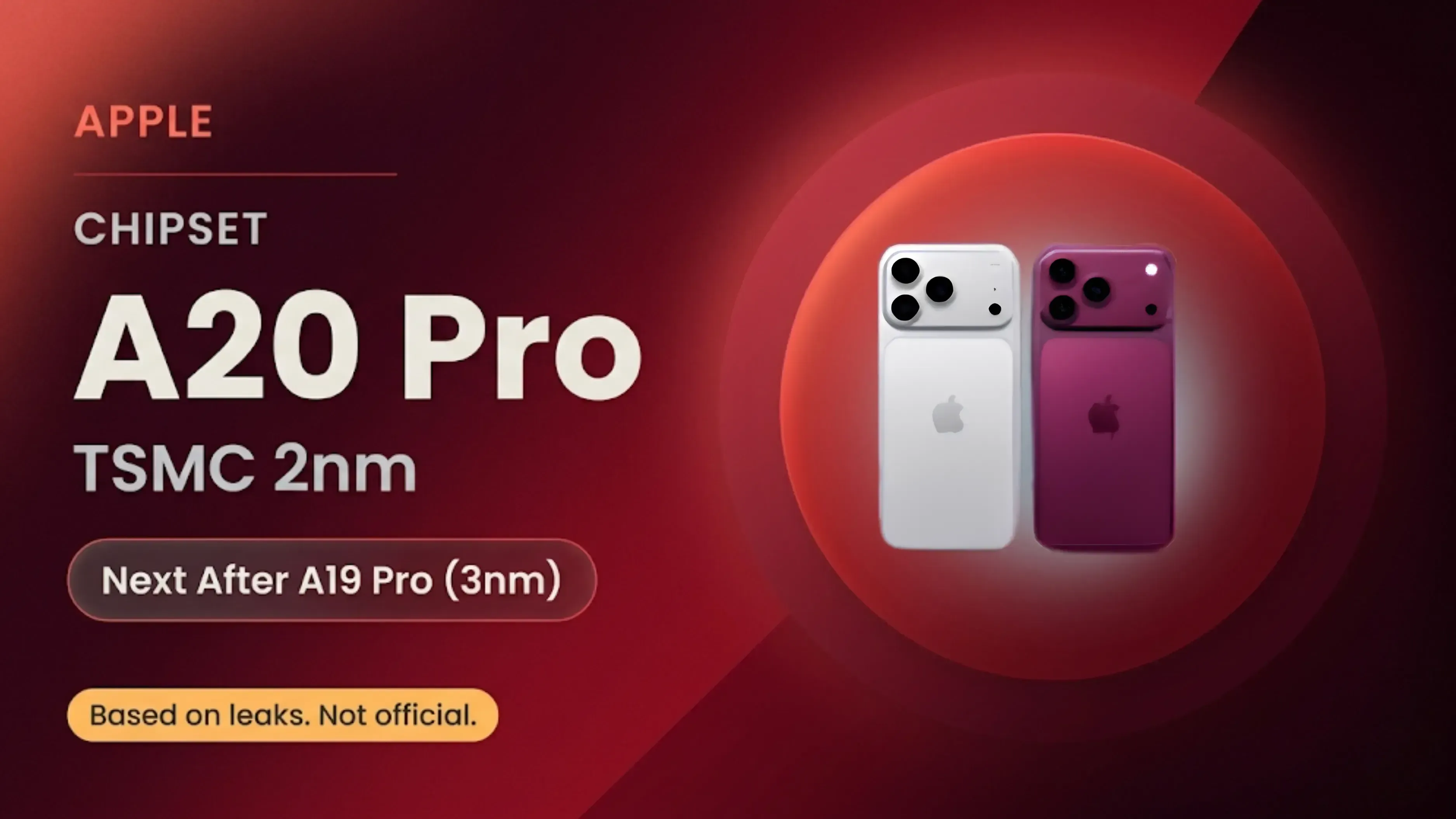
The iPhone 18 Pro is expected to use Apple’s A20 Pro chip, made with TSMC’s 2nm process. The current iPhone 17 Pro uses the A19 Pro chip on a 3nm process. Moving from 3nm to 2nm means better power efficiency and more transistors in the same space, leading to longer battery life, lower heat, and better performance.
The main battery benefit of a 2nm chip is not just that it uses less power at the same speed. More importantly, it can finish demanding tasks faster and return to a low-power state sooner. This means the chip spends less time using a lot of energy, which helps save battery during everyday use.
For the iPhone 18 Pro’s camera, the A20 Pro’s Neural Engine will handle computational photography faster and more accurately than the A19 Pro. Features like variable aperture photography, night mode, ProRAW capture, and video recording will all benefit from this stronger and more efficient Neural Engine, thanks to the 2nm process.
In simple terms, moving from TSMC’s 3nm to 2nm process brings three main improvements: more transistors in the same space (which allows more features), better power efficiency (same speed with less energy), and less heat. For users, this means longer battery life, better performance during long use, and less overheating during demanding tasks like long 4K video recording.
iPhone 18 Pro Camera: 48MP Variable Aperture Primary
The biggest rumored camera change for the iPhone 18 Pro is a 48MP main camera with a variable aperture. Current iPhones use a fixed aperture that doesn’t change between shots. A variable aperture lens can open or close depending on the scene, giving the camera more control over exposure and depth of field than a fixed aperture.
Variable aperture is important for low-light photography. A wider aperture (lower f-number) lets in more light, so photos in dark settings look better without needing higher ISO, which can add noise. A narrower aperture (higher f-number) increases depth of field but lets in less light. With a fixed aperture, the camera can only adjust shutter speed and ISO. A variable aperture gives the camera greater control and helps it achieve the best image quality across different lighting conditions.
For portrait photography, fixed-aperture cameras use software to blur the background by creating depth maps. With a variable aperture, the camera can physically change the depth of field. A wider aperture gives a more natural background blur, similar to what high-end cameras produce. For those who care about portrait quality, having real aperture control is a big advantage.
The leaked camera setup for the iPhone 18 Pro includes a 48MP main, 48MP ultrawide, and 48MP telephoto lens. The iPhone 17 Pro already has 48MP for the main and ultrawide, but only 12MP for the telephoto. If the new model upgrades the telephoto to 48MP, all three cameras will have the same high resolution, making it easier to crop photos at any zoom level.
Samsung tried variable aperture on the Galaxy S9 series in 2018 (f/1.5 to f/2.4), but dropped it in later models. If Apple adds variable aperture to the iPhone 18 Pro, it would be the biggest camera hardware change in years and could make a real difference for photographers.
It’s important to note that the variable-aperture camera is currently only being tested and isn’t confirmed for the final iPhone 18 Pro. Adding variable aperture makes manufacturing more complex and could affect durability, especially for waterproofing. We’ll find out if Apple includes it when the phone launches in September 2026. Not all features tested in prototypes make it to the final product.
Design: No Major Change in 2026
The leak says the iPhone 18 Pro will look very similar to the iPhone 17 Pro. Apple is reportedly saving a bigger design update for a special anniversary iPhone in 2027, which will mark 20 years since the first iPhone. The 2026 model is mainly a hardware upgrade, not a design overhaul.
The eSIM-only version also looks a bit different because it doesn’t have a SIM tray, which changes the shape of the phone’s sides. In the US, Apple already sells eSIM-only iPhones with a smoother side frame, while in other markets, a visible SIM slot remains. Whether this matters to buyers depends on whether they notice or care about the cleaner look.
Pricing: Production Costs Could Rise But Competitive Markets May See Restraint
With the 2nm chip, larger batteries, and possibly a variable-aperture camera, the iPhone 18 Pro will cost more to make than the iPhone 17 Pro. Leak sources say Apple might not pass all these extra costs to buyers, especially in price-sensitive markets like China. In India, where the iPhone 17 Pro started at Rs. 1,19,900, Apple may use a similar pricing strategy to keep the new model affordable for the same group of buyers.
Apple’s pricing is always hard to predict and isn’t revealed by prototype leaks. While production costs are rising, how much of that is passed on to the retail price depends on Apple’s choices, currency rates, tariffs, and competition at launch.
iPhone 18 Pro: What Is Known and What Is Still Unknown
Here’s a summary of what the current iPhone 18 Pro leaks have revealed and what still needs to be confirmed at the September 2026 launch:
From Leaks (Prototype Testing)
Still Unknown Before Launch
Two battery variants tested: ~4,056mAh (physical SIM) and ~4,288mAh (eSIM)
Final battery capacity at launch
Expected A20 Pro chip built on TSMC's 2nm process
Official chip name and benchmark performance
48MP variable-aperture main camera reportedly under testing
Whether variable aperture reaches production units
Triple 48MP rear camera setup expected (main, ultrawide, telephoto)
Final camera specifications and zoom capabilities
Pro Max prototype battery reportedly between 5,100mAh and 5,200mAh
Final Pro Max battery size
No major external redesign expected
Final dimensions, weight, and display specifications
Apple reportedly aiming to avoid major price hikes in competitive markets
Official India and global pricing
eSIM-only models may receive larger batteries
Which countries receive eSIM-only variants
Information attributed to tipsters Digital Chat Station and Ice Universe
Official launch and pre-order dates
Expected announcement window: September 2026
Market-wise availability details
Final Verdict
Leaks about the iPhone 18 Pro show that this update focuses on better battery life, improved cameras, and a more efficient chip, not a new look. The most interesting change is the dual-battery setup, with eSIM-only models getting a larger battery thanks to the extra space. The A20 Pro chip on TSMC’s 2nm process should make the phone even more efficient. If the variable-aperture camera makes it into the final product, it would be the biggest camera hardware upgrade since Apple added the telephoto lens.
The iPhone 18 Pro is expected to launch in September 2026, so that’s when we’ll get all the final details. Everything discussed here is based on prototype testing and could change before production starts. We’ll know the official specs, including whether the variable aperture camera makes it, at Apple’s September 2026 event.
Bottom Line: iPhone 18 Pro leaks from Digital Chat Station and Ice Universe show two battery sizes—about 4,056 mAh (physical SIM) and about 4,288 mAh (eSIM-only). Pro Max: about 5,000mAh (SIM) and 5,100-5,200mAh (eSIM). A20 Pro on TSMC 2nm. 48MP variable-aperture primary camera being tested. Triple 48MP layout. No major redesign. Expected September 2026. All specs are from prototype testing and not confirmed by Apple.
FAQs
1. What is the iPhone 18 Pro battery size?
According to leaked prototype testing data, two battery sizes are being tested: approximately 4,056 mAh for physical SIM models and approximately 4,288 mAh for eSIM-only models. The iPhone 17 Pro's reported capacity for comparison is approximately 3,910mAh. Final battery sizes will be confirmed at Apple's launch event in September 2026.
2. Why does the iPhone 18 Pro have two different battery sizes?
The physical SIM card tray, its mechanism and associated components take up internal space inside the phone. eSIM-only models do not have a SIM card tray, freeing up internal space for other components. Apple is reportedly using the recovered space to fit a slightly larger battery in eSIM-only iPhone 18 Pro models, resulting in approximately 232 mAh more capacity than the physical SIM variant.
3. What chip will the iPhone 18 Pro have?
The iPhone 18 Pro is expected to use Apple's A20 Pro chip manufactured on TSMC's 2nm process node. The 2nm process is expected to deliver better power efficiency, lower heat generation and improved performance compared to the 3nm A19 Pro in the iPhone 17 Pro. This is from pre-launch leaks and has not been confirmed by Apple.
4. What is TSMC 2nm and why does it matter?
TSMC's 2nm is a semiconductor manufacturing process that produces chips with smaller transistors and higher density than those produced by the 3nm process. The practical result is a chip that delivers more performance per unit energy, runs cooler at equivalent performance levels, and enables more features within the same chip area. For the iPhone 18 Pro, 2nm means longer battery life from real-world use, better sustained performance and faster computational photography processing.
5. Will the iPhone 18 Pro have a variable aperture camera?
The leak claims Apple is testing a 48MP variable-aperture primary camera for the iPhone 18 Pro. Variable aperture allows the camera to mechanically adjust the lens opening to control the amount of light and depth of field. Whether this feature survives from prototype testing to the final shipping product will be confirmed at Apple's September 2026 launch event. Variable aperture adds manufacturing complexity and has been tried and dropped by other manufacturers before.
6. What cameras will the iPhone 18 Pro have?
The leak suggests a triple 48MP rear camera layout: 48MP primary (with possible variable aperture), 48MP ultrawide and 48MP telephoto. The iPhone 17 Pro has 48MP primary, 48MP ultrawide and a 12MP telephoto. If confirmed, the iPhone 18 Pro would be the first iPhone with 48MP resolution across all three rear cameras. Camera specifications will be confirmed at Apple's September 2026 announcement.
7. Will the iPhone 18 Pro look different from iPhone 17 Pro?
Based on current leaks, no major design change is expected for the iPhone 18 Pro series. Apple is reportedly planning a more significant redesign for a special anniversary iPhone in 2027, approximately 20 years after the original iPhone was introduced in 2007. The 2026 iPhone 18 Pro is positioned as a specification upgrade within the established design.
8. When will the iPhone 18 Pro launch?
The iPhone 18 Pro is expected to launch in September 2026, following Apple's established annual iPhone release pattern. Apple has not made any announcement regarding the iPhone 18 series. The September 2026 timeline is based on the standard release cadence, not on a specific Apple announcement.
9. What is the iPhone 18 Pro Max battery size?
Leaked prototype testing data suggests two variants: approximately 5,000mAh for physical SIM models and 5,100mAh to 5,200mAh for eSIM-only models. The same principle applies as for the Pro: the removed SIM tray frees space for a larger battery in eSIM-only units.
10. Will the iPhone 18 Pro price increase?
The 2nm chip, larger batteries, and the potential variable-aperture camera mechanism increase the cost of components for the iPhone 18 Pro. Leak sources suggest Apple may limit price increases in competitive markets like China and possibly India. Apple has not announced any pricing and all price expectations are speculation until Apple's September 2026 launch event.
If you want to sell your old devices, then click here.